


Youth soccer programs in Italy for international players aged 14-22
ISM offers youth soccer and youth football programs in Italy for international players aged 14 to 22. Pathways include short-term evaluation, long-term residential development, pre-season preparation, competitive tournaments and professional coach education. The right option depends on the player’s age, level, position, available time and development objective.
Italy offers young football players the opportunity to develop within one of the world’s most respected football cultures. Tactical awareness, technical precision, discipline and intelligent decision-making are central to the Italian approach, making the country an attractive destination for teenagers who want to improve their game and understand their current level.
ISM International Scouting Center does not offer one identical solution to every player, team or coach. A 14-year-old seeking an initial assessment may need a different pathway from an U18 player pursuing continuous development or an international youth team preparing for a new season. Each program is therefore connected to a specific objective, duration and participant profile.
What are the best youth soccer programs in Italy?
The best youth soccer program is the one that matches the player’s age, current competitive level, maturity and immediate objective. A longer or more intensive program is not automatically better if it does not fit the participant’s real needs.
International players can choose from several types of programs in Italy, including:
- short-term football trials;
- individual player evaluation programs;
- long-term residential development pathways;
- pre-season training camps;
- competitive tournaments;
- programs for international teams and academies;
- educational courses for coaches.
Families should consider not only what the program offers, but also what the player is ready for at this stage of their development.

Can teenagers join a football academy in Italy?
Yes. Teenagers can join football academy programs in Italy, provided they meet the age, sporting and practical requirements of the selected pathway.
Programs may be suitable for players from approximately 14 years of age, U18 and U22 levels, although specific eligibility depends on the individual activity.
Age alone does not determine whether a player is ready. Coaches and families should also consider:
- previous playing experience and current competitive level;
- physical maturity and training history;
- ability to live and train away from home;
- motivation, discipline and willingness to follow instructions;
- language and communication skills;
- the duration and intensity of the selected program.
For younger participants, family involvement is especially important. Parents should understand the program structure, supervision, daily routine and realistic objectives before confirming participation.
Soccer development for teenagers
Soccer development for teenagers is a gradual process. At this stage, players are still improving technically, physically, tactically and mentally, but they are also beginning to face higher competitive expectations.
A good development program should help the player become more complete rather than focusing only on visible strengths.
Teenage football development should therefore include several connected areas.
Technical development
Technical work helps players perform actions with greater control, speed and accuracy.
Sessions may focus on:
- receiving the ball in different body positions;
- playing with both feet;
- passing over short and long distances;
- dribbling in restricted spaces;
- crossing and finishing;
- controlling difficult passes;
- performing accurately under pressure.
The objective is not simply to complete an exercise. Players must learn to use technical skills effectively during real match situations.
Tactical development
Tactical understanding becomes increasingly important during the teenage years.
Players need to recognise:
- when to press;
- when to protect space;
- how to support teammates;
- how to create passing options;
- how to maintain team balance;
- when to accelerate or slow down the game;
- how their role changes in different phases of play.
Italian coaching is often associated with tactical detail, making these programs useful for players who want to become more intelligent and adaptable on the field.
Physical preparation
Teenage players develop at different speeds. Physical training should therefore be appropriate to age, maturity and previous experience.
Preparation may involve:
- coordination;
- acceleration;
- agility;
- strength;
- mobility;
- endurance;
- injury-prevention exercises;
- recovery habits.
The aim is to support football performance without evaluating every player only according to height, size or early physical development.
Mentality and personal growth
A player’s mentality can influence long-term progress as much as technical ability.
Training in an international environment can help teenagers develop:
- discipline;
- concentration;
- independence;
- resilience;
- confidence;
- responsibility;
- communication;
- respect for teammates and staff.


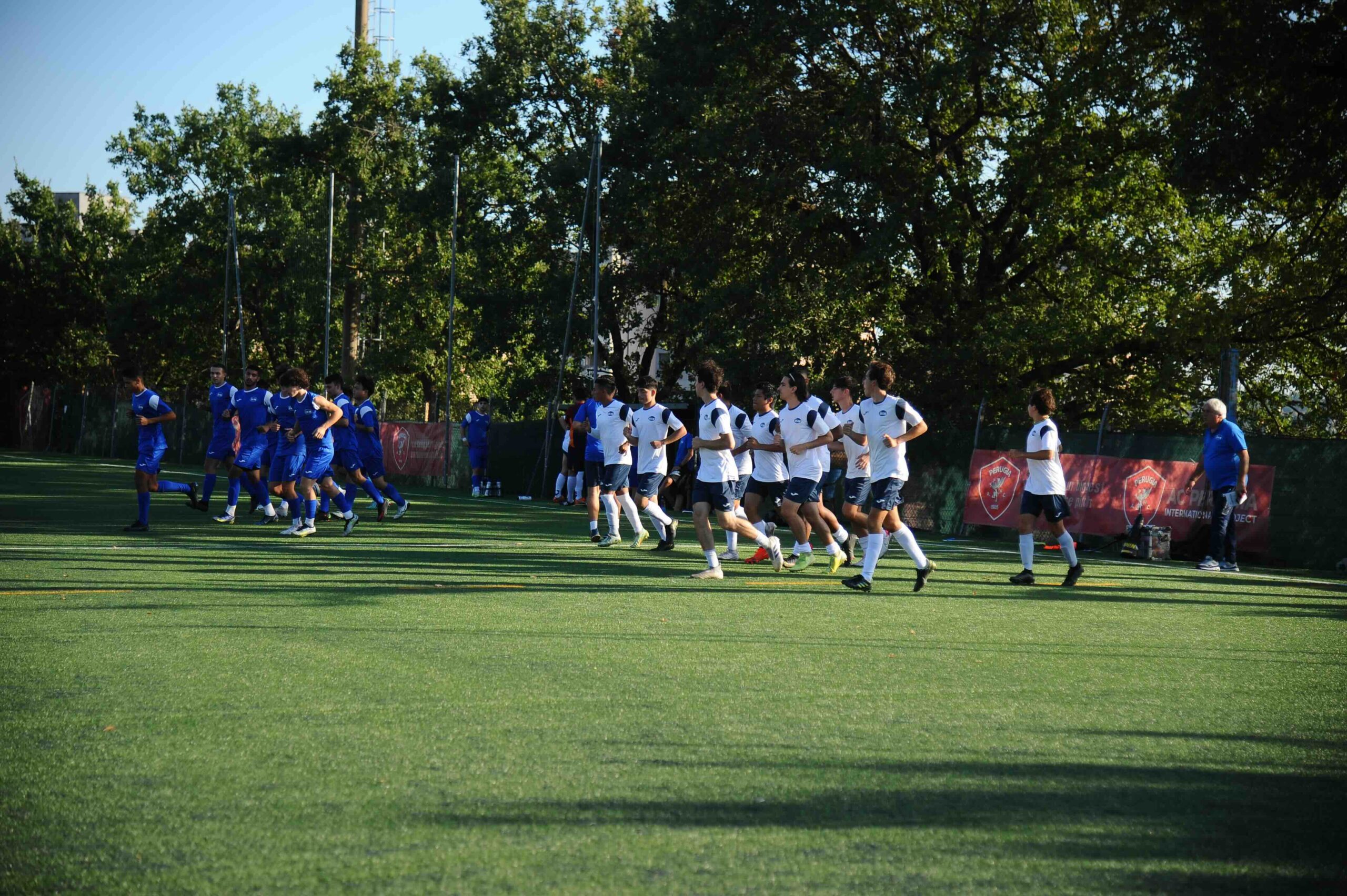
Programs for 14, U18 and U22 players
U14 Players
An U14 player is often still developing physically and tactically. The priority should usually be building strong foundations, improving match
understanding and gaining experience in a more demanding environment.
A suitable program may include:
- technical training;
- tactical education;
- friendly matches;
- initial player evaluation;
- exposure to a different football culture;
- feedback on strengths and areas for improvement.
At this age, progress should not be measured only by whether a professional opportunity appears immediately. A clear development plan can be equally valuable.
U18 Players
U18 players are normally closer to the transition between youth and senior football. Coaches may expect greater tactical discipline, physical readiness and
consistency.
An U18 pathway may focus on:
- performance under competitive pressure;
- positional specialisation;
- physical intensity;
- faster decision-making;
- adaptation to senior football demands;
- assessment during matches;
- identifying realistic next steps.
At this level, small details become increasingly important. Players must show not only talent, but also reliability, professionalism and the ability to contribute to a team.
U22 Players
U21 players generally need programs that provide a clear competitive purpose. Development remains important, but the evaluation is often more closely connected to
current performance and readiness.
These players may benefit from:
- structured trials;
- intensive training;
- competitive matches;
- physical preparation;
- role-specific feedback;
- longer periods of observation;
- pathways matched to their present level.
A player does not automatically become unsuitable because they have reached U21 level. However, opportunities may become more selective, making honest evaluation and realistic planning increasingly important.
Which youth soccer program is right for me?
The most suitable program depends on what the player or team needs now, rather than on one general ambition.
Player profile | Suggested program |
Player looking for an initial evaluation | Try-Out Italy |
Player needing long-term development | Talent Identification Program |
Team or academy preparing for the season | Pre Season Training Camp |
Youth team looking for international competition | Professional Tournament |
Coach looking for professional education | Pro Coaching Course |
Try-Out Italy
Try-Out Italy is suitable for players who want to experience a structured period of training and evaluation within the Italian football environment.
This type of pathway can be useful for international players who have limited time in Italy but want more than a recreational camp.
Talent Identification Program
The Talent Identification Program is intended for players who need a longer period of development and observation.
This pathway may be suitable for players who want to work more deeply on their technical, tactical, physical and mental qualities.
Pre Season Training Camp
The Pre Season Training Camp is designed for teams and academies preparing for the beginning of a competitive season.
For international teams, training in Italy can also provide a valuable opportunity to compete against unfamiliar opponents and experience a different football style.
Professional Tournament
The Professional Tournament is suitable for youth teams seeking competitive international experience.
For coaches, tournaments provide an opportunity to evaluate team behaviour in a demanding environment. For players, they offer competition, visibility and valuable match experience.
Pro Coaching Course
The Pro Coaching Course is intended for coaches who want to expand their knowledge of training methods, tactical organisation and player development.
The quality of a youth program depends heavily on the quality of its coaching. Supporting coach education can therefore improve not only individual knowledge, but also the development environment experienced by entire teams and academies.
Training, trials and scouting opportunities
Youth soccer programs may include training, trials and scouting-related activities, but these terms should not be treated as identical.
Training
Training is focused on development. It helps players improve technical skills, tactical understanding, physical readiness and decision-making.
Trial
A trial is a limited period during which the player is evaluated. The objective is to understand the participant’s current qualities, suitability and potential next steps.
Scouting Opportunity
A scouting opportunity allows coaches or football professionals to observe the player in training or match conditions.
Participation provides exposure and evaluation, but it does not guarantee selection, a club trial or a professional contract.
A reliable youth football academy should explain these differences clearly. Families need to know whether a program is primarily designed for improvement, evaluation, competition or a combination of these objectives.

Apply for a football scouting opportunity in Italy
A football pathway for young international players should not be based on one isolated event. Development normally involves several stages.
1. Player Profile Review
The process may begin with basic information such as:
- age;
- nationality;
- position;
- current club;
- competitive background;
- recent football video;
- preferred program;
- short-term and long-term objectives.
This helps identify which pathway may be appropriate.
2. Initial Training and Evaluation
The player enters a structured environment and is observed during different activities.
Coaches evaluate not only visible skills, but also how the player learns, communicates and responds to instructions.
3. Match Experience
Matches provide a more realistic view of the player’s performance.
They reveal:
- decision-making under pressure;
- tactical behaviour;
- consistency;
- communication;
- reaction to mistakes;
- effectiveness against unfamiliar opponents.
4. Feedback and Direction
A useful evaluation should help the player understand what needs to happen next.
The outcome may involve:
- continuing technical development;
- joining a longer ISM program;
- participating in more matches;
- preparing physically;
- improving tactical knowledge;
- returning for another evaluation;
- exploring an opportunity suited to the player’s current level.
5. Long-Term Development
Some players need time before they are ready for a more competitive step.
A longer pathway allows coaches to monitor progress, establish individual priorities and evaluate whether the player can adapt to increasing demands.
Progress is rarely linear, especially during adolescence. A well-designed program should recognise both current performance and future potential.
How Parents Can Choose the Right Program
Parents play an essential role when a teenage player is considering a program abroad.
The decision should not be based only on the possibility of being seen by scouts. Families should evaluate the entire experience.
Consider the Player’s Real Objective
Parents should first ask what the player needs most:
- technical improvement;
- tactical education;
- an initial evaluation;
- more competitive matches;
- pre-season preparation;
- a longer development pathway;
- an international experience.
A player seeking improvement may not need the same program as one seeking immediate evaluation.
Check the Age and Level Requirements
A program should be suitable for the participant’s age and competitive experience.
Training with players who are significantly older, stronger or more advanced is not always beneficial. The correct level should challenge the athlete without placing them in an unsuitable environment.
Understand the Daily Structure
Families should ask how much time is dedicated to:
- training;
- matches;
- recovery;
- meals;
- transportation;
- free time;
- cultural activities;
- education, where applicable.
A clear schedule helps families understand whether the program is structured professionally.
Evaluate Safety and Support
For under 18 players, important considerations include:
- supervision;
- accommodation;
- transportation;
- staff availability;
- communication with parents;
- emergency procedures;
- dietary needs;
- medical support;
- safeguarding policies.
These details are not secondary. They are part of the quality of the program.
Look for a Clear Next Step
A good program should explain what happens after participation.
The player should not leave with only photographs and memories. Whenever possible, the experience should provide useful feedback, a better understanding of the player’s level and a direction for continued development.
Why Choose ISM Youth Soccer Programs in Italy?
ISM offers different pathways for players, teams, academies and coaches who want to experience Italian football in a structured environment.
The programs are designed around specific objectives rather than one generic format.
Participants can benefit from:
- football training in Italy;
- technical and tactical development;
- competitive match experience;
- player evaluation;
- short-term and long-term pathways;
- programs for individuals and teams;
- realistic feedback;
- support in selecting the most appropriate option.
The aim is not to promise an automatic professional outcome. It is to create an environment where players can train seriously, test themselves, receive
guidance and take a more informed next step.
Frequently asked questions
What are the best youth soccer programs in Italy?
The best program depends on the player’s age, experience and objectives. Short trials are suitable for initial evaluation, while long-term academy programs are better for continuous development. Teams may benefit from pre-season camps or international tournaments.
Can teenagers join a football academy in Italy?
Yes. Many football academy programs in Italy accept international teenagers. Eligibility depends on the player’s age, level, maturity and the requirements of the specific program.
Are there soccer programs in Italy for international students?
Yes. International students can attend short-term trials, training camps, residential development programs and team-based activities. Families should verify whether education is included when considering a longer stay.
Do players need competitive experience?
Previous competitive experience is useful, particularly for high-performance programs, trials and tournaments. Eligibility should be assessed individually because different programs have different objectives.
Can a youth soccer program guarantee a professional contract?
No. A serious youth soccer program cannot guarantee a professional contract. It can provide development, evaluation, match experience and possible exposure, but club decisions depend on performance, eligibility and sporting requirements.
How can an international player apply?
Players can apply by submitting personal information, football experience, playing position, video material and their preferred program. The profile can then be reviewed to identify the most suitable pathway.
Are there 14, U18 and U22 football programs?
Yes. The appropriate pathway depends on the player’s age, current level and objective. 14 programs normally emphasise foundations, U18 programs support the transition toward senior demands, and U22 programs focus more strongly on current performance and realistic competitive direction.